what about nomad clothes?

marino

I’m not talking style, but rather, fabric.

So you’re wandering the earth in all sorts of different climates, and you want to travel with just one bag. A carry on. What kind of clothes do you bring?

the general answers is – as few as possible. Sturdy, stylish, adaptable. Ideally something that keeps you cool in hot temps, warm in cold temps. Something that doesn’t stop working when it gets wet, is a breeze to clean, and wicks sweat away from your body.

As extra credit, it’d be great if it could go a while between washings without smelling at all, and then when you did wash it, it cleaned up easily and dried very fast.

Such a fabric exists – it’s called merino wool. And they make a ton of things out of it. Button-down dress shirts with collars, tshirts, socks, underwear, even shorts and pants.

Clothes made out of merino wool are spendy, to be sure. A tshirt can be $90 USD. But the shirt behaves as above, and you could live with just two of them, one if you could go without while it dried.

Undies and socks made from the stuff are expedition-class garments. If you selected wisely you could have almost every traveler’s fashion need accounted for in just a few basic items, mixed and matched. My fav item so far – my merino wool hoodie. I can’t tell you how perfect it is in the chill or airplanes, or Denver. Or Chicago.

If this is your first hearing about this super-fine wool, you might be thinking of old wool sweaters or socks. perfectly fine outer garments but itchy and not appropriate to wear next to skin. This is simply not true; merino wool is some of the finest and softest fabric you’ll ever wear.

All of the above qualities make it the go-to fabric for long-term travelers. I also have kind things to say about bamboo fibers and hemp clothing as well, but merino wool clothing is in my own experience amazing all around.

long term travel – “How do you afford it?”

money

Right after “Where are you going to go?” this is definitely the most common question we’re asked. There is definitely a strong idea that to travel long term, to leave it all behind and hit the road with a mobile lifestyle, you need a ton of money.

I guess that might be true, if you were taking a 52-week vacation. Can you imagine that? Leaving regular life behind just like you do for vacation but instead of 2 weeks of hotels, ferries, rentals, eating out all the time, sightseeing tours, and scam cab rides… what if you did that for 52 weeks? Ha!

That’d cost a fortune. We’re definitely not doing that.

We’re not staying in hotels. Well, maybe once in a while we’ll break down and spring for one; air conditioning at just the right time can feel like a little bit of heaven. But really, as a rule, no hotels.

So then people who haven’t done long-term travel are wondering – where do you stay?

You could camp, which we’re not doing. Our travel plan is pretty loose, to give us some flexibility in where we go so we can stay where we want, leave when we don’t, and adjust while we’re in motion. This means we haven’t made a lot of ( really, any ) solid plans for where we’re staying before we get there. Sounds like madness, I know. But there’s a way to do this.

We get to an area we want to say in, say Galway Ireland. On the recommendation of friends and social media, we find a hostel for those first few days. This isn’t icky; there are plenty of non-stabby hostels that are clean and great to stay at, and we find one of those. If we’re staying more than a few days, that means we’re staying 2-3 weeks, so we use those couple days to find a place on AirBnB. A place there for that amount of time isn’t expensive; you could pay a lot, but you definitely don’t have to. $300 for 2 weeks? Sounds great.

So, not going at the where-you’re-staying thing like you’re on vacation helps. Like, a lot. You can follow that thinking pretty far – cook some meals, make some lunches. Almost all of the places we’re going are not laid out like big American cities; you can walk to a market, walk to your place, walk or public transport anywhere. So this also saves on gas.

You make up your mind to do walking tours, take pictures, and be smart about what you pay for, you can not only save a lot of money, but your cost of living – what you pay out day to day for just existing in our world – goes down.

You also save money. Just like for the vacation, but maybe more so. You go out to eat less. You have no-spend-Saturdays. You watch Netflix instead of renting something that streams. You have to be at least kind of serious about this, and you have to be consistent. If you’re in the 98% and can’t put money aside somehow, long term traveling is not going to be a viable option for you.

You also stop paying for things that are normal at home. Phone service. Car insurance. Health insurance. The list goes on and on…  but there are plenty of things you don’t need to pay on when you’re not going to be home for a year. This also adds up.

A third serious way to make your money go further is to travel where your money works very hard. You could go to Stockholm, Tokyo, or Tahiti…  but why not think about going to Prague, Hanoi, or Nicaragua? In these places, a world-class meal can be had for $10 US or less. Your money goes a long way, and the surfing in Nicaragua is at least as sweet as it is in Tahiti.

It all adds up

It’s work. Before you travel, you need to figure it out. But saving, adjusting what you’re paying for, learning to be happy without spending as much, and going to places where your money goes much further all make long term world travel possible for most of us. If you can do remote work during this period…  so much the better.



“Aren’t you worried about safety?”

6932575253_2f04cd0486_z

Kinda.

But you really can’t live life that way.

But you can take som basic care and caution into your life. We don’t go to places where they shoot at people in the streets, or wild dogs or uplifted gorillas rule the night. We don’t go to places or friends in the region tell us to stay away from. We don’t go to places where Trump supporters live, or they destroy works of art and historical significance because they show breasts or penises.

But after all that due diligence, we pretty much go where we want. If no one’s told you, this is key: places like Iran and Cuba ( for example ) are safe and friendly for Americans to travel to. That’s one of the big open secrets of travel; in so many places our media would have you think it isn’t safe for Americans, places they say they hate us, they’re actually just fine with us.

As far as places like Brussels and Paris, where some shit has happened, or could possibly happen…  we have no intention of staying away from those places. If we followed that rule at home, we’d never go to Manhattan, New Orleans, or San Bernadino.

Crazy, right?

So we just take the normal amount of care. We don’t get drunk in public, we don’t leave our shit laying around, or flash our fancy iPads under everyone’s nose. We don’t act like entitled American white people with loud voices and arms waving all over the place. And we’ll probably be just fine.

when people ask where we’re going…

7564205546_63212dfdb8_z


…it’s one of the last things we think about. A great quote from a great show:

How come you don’t care where you’re going?

Because how you get there is the worthier part.

Great words. And they really embody the spirit we seem to be hanging onto while we plan this walkabout. We’re not really going on vacation; that’s not so much what this is about. We will wind up seeing some great things, take pictures, interview people, and swoon a bit. But we’re not making a list, not checking items off an itinerary.

So why travel, if not to see The Sites?

  • To get a different perspective, new points of view. On us. Our country. Living. What’s important. How work Gets done. How people die. Important stuff.
  • To focus more on experiences, people, and skills. Less on stuff.
  • To move out of our comfort zone a bit, to practice problem-solving in ways it’s hard to do on a peaceful, tropical island.
  • To learn to live in motion, to make home and heart internally dependent, instead of externally dependent.
  • To grow in our affection and love and understanding of one another, and of others.
  • To get by with less spending, less stuff, less stress.
  • To practice the #onebag thing, to walk the walk
  • To learn to communicate in languages other than American English
  • To practice remote working, and building streams of income from residual sources

And so on. For us, the walkabout is all of these things, and more. When you look at it this way, the question “where are you going?” starts to mean much less. It’s an easy thing to talk about when you mention world travel, but it’s not really important; nowhere close to the main thing.

All this being said, we’d totally like to see the South of France, Greece, and North Africa. And some other cool places.

Choosing a “one” bag

maj00

The #onebag thing  is about traveling with, having all your possessions in a single bag. All of us could do this, if we just had a giant bag. But really, the unspoken limitation is that this bag should be carry-on size; that is, the one bag with all your worldly possessions should fit neatly into the overhead bin on a major airliner.

Process that for a second.

Most people pack more than one bag for a long weekend trip. I’m talking about all your stuff, all of it, fitting into one bag. That fits in the overhead.

Still with me?

This can be done. It just takes some work. Some hard choices. Some commitment to an idea. And some focus.

It usually also means high-quality gear, and some disposable stuff. You clothes are a good example – if you have only a bag’s worth of stuff, your clothes should be special. They should suit for most occasions. Be amazing at protecting you. Require very little maintenance. Be tough enough to endure exposure to Some Shit.

Makes sense, yes? But at the core of the #onebag way of life is the one bag. Which bag do you choose?

Here are some things to keep in mind:

  • It might be easier to choose a bag hat others have reviewed, that others have tested, and that has passed those tests. Why re-invent the wheel, or explore new ground with such an important thing? Do your research. There’s a whole #onebag community out there.
  • Your bag should fit in the overhead bin. Just saying. Checking your one bag sucks. Losing it because you checked it and someone was irresponsible sucks even more.
  • It should be durable. If you go with well-reviewed and rated bags, this won’t be a problem
  • It probably should not stand out. If all your shit is in a single bag, it would hurt a bit more if this bag were stolen, yea? So don’t advertise so much. Don’t get a day-glo bag. Don’t get one that screams Rich Traveler Here. Don’t adorn it with all your lift tags, and other steal-me-bling. Get something plain, one color, non-neon and non-reflective.
  • It should be sized for your body and gender. Duh
  • To paraphrase Olivander – the bag chooses the bearer. You’ll know it when you see it, when you feel it on your back.

Some onebags I’ve tried on for size: The Deuter Futura 28, the Futura 42, the Tom Bihn Synapse 26, The CamelBak BFM 500, and the Osprey Farpoint 40.

I’m currently going with the Osprey.

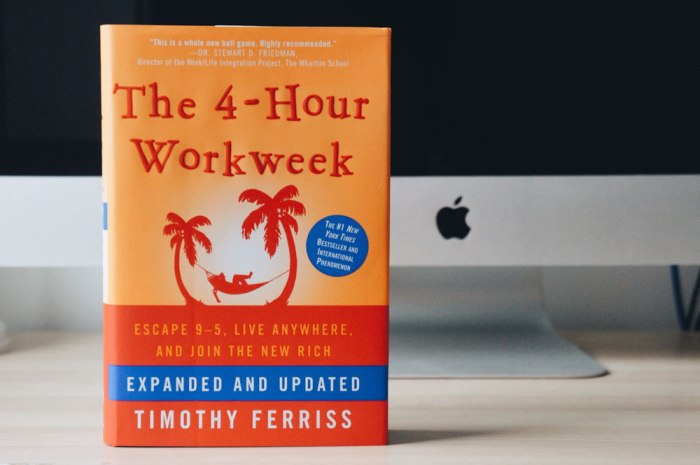
awesome book – the four hour workweek

There’s lots I love about this book, but if I had to pick a single thing, it was that the author Tim Ferriss opened up my eyes to the idea of “lifestyle design.” This is the it-seems-simple idea that you have complete control over the path your life goes.

The more serious breakdown for me was showing me that there was another, completely legitimate and open pathway through life besides working-til-you-retire-and-then-have-fun. I had been raised with the idea that you work hard, save for retirement, and that’s finally when you get to travel and do things beyond the home, beyond the 2-3 weeks a year you got for vacation.

I had a heads up that this might not be the only way to do things when I got into tech. As I had to explain to my very nervous mom ( even though I was in my early 30s ), that in tech it still might be possible to get a job, work for 25 years, and then retire…  it was certainly not the norm. Jumping jobs was the norm, especially since the .com boom. And the way of looking at work that I’d grown up with wasn’t going to work in modern-day Tech.

It was a while later that I stumbled onto the 4 Hour Work Week. Where I learned this simple fact:

I could sprinkle my retirement throughout my life.
This seems like a no-duh thing, but for me it wasn’t. Ferriss breaks it down in serious detail in the book, but it definitely helped me see that not only was it possible, but much more alluring and a better fit for me than the more traditional models. I wanted to travel. I wanted to experience. I wanted to enjoy my life…  not so much learn to live with things I’d been handed.

I’m still working at this, still nowhere near as “free” as I’d like to be, but I’m definitely on the path.

For me, that looks like this: not needing or having a lot of stuff. Drawing most of my happiness from doing enjoyable things, learning, experiencing great events and people, making deeply satisfying friendships, finding a partner who shares this point of view. It also involves being geographically independent from work. I love the office, the people, but I want it to be my decision to go in, or not. As I get a bit older, it also more and more involves freedom from 9-5. I have taken a job in a field that is very much 9-5 and hacked, bent, folded, spindled, and mutilated that about as far as it can be pushed from the norm…  but I’m still accountable. At least at this moment. But as I’ve said, I’m working on that.

I want to wake up and be able to spend all day enjoying a hobby, a place, or a person. If I don’t feel like earning that day, then I want the option to not work. I don’t want to have to ask someone, I just want to be able to do it. I enjoy working with people, I think I am just tired of the idea of working for people. Besides myself, I mean.

Don’t get me wrong; I have been incredibly lucky with the bosses and environments I’ve been a part of. But I’d like to try my hand at being more free. Designing my life, as Tim says.

So far, that’s going pretty well. Stay tuned.

timferriss-4HWW-adachiu

working while traveling – our ideas

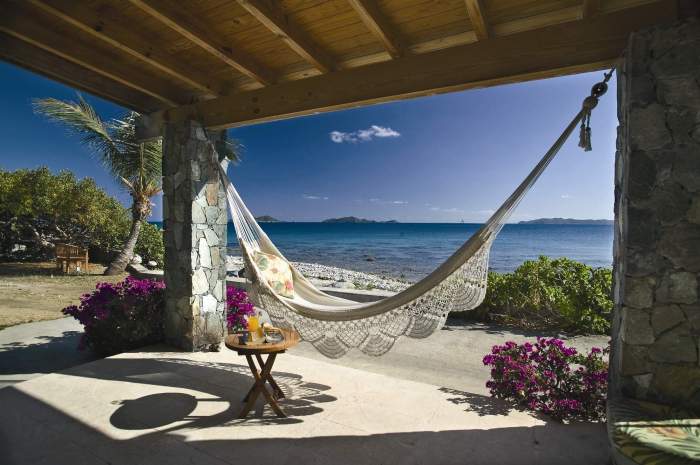
hammock

Kim and I have a bunch of ideas about working while we travel. We  ( hopefullly ) have enough set aside so that it won’t be absolutely necessary to work…  but it’d be nice to be able to take this time and set up something that’s sustaining.

We don’t like the idea of selling physical products, but we really really like the idea of sharing what we know and teaching others. With the proliferation of e-readers, it seems like writing some very niche how-to manuals or developing some online courses would be interesting places to start.

There’s a bit more to this strategy, but for the most part it is that simple. Some things we’d like to write and market to appropriate audiences:

  • A survival guide for teachers moving from the mainland to Hawaii
  • A series of informational products for UX staffers – how to do a better job recruting and keeping UX peeps, how to help candidates get better gigs more often, how to be the go-to resource for UX jobs.
  • Another UX effort – UX-English for ESL tech people, to help them learn the jargon and terms while at the same time familiarizing them with the discpline
  • Facebook “rules” of etiquette. This is probably half entertainment, half modern-day Miss Manners in a place that could definitely benefit from a little guidance.
  • For CERT peeps – how to build the best bag possible from the one you’re issued
  • A set of digital literacy courses for kids and technophobes


Not an exhaustive list, but definitely places to start.


our walkabout – a rough plan

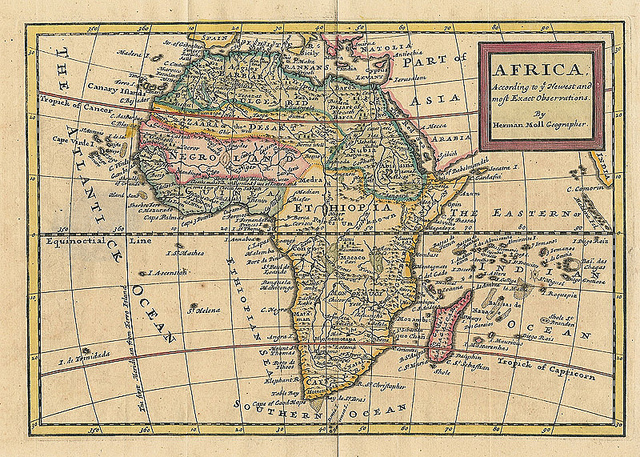
map.jpg

A rough idea of our travel plan –

We start with a re-visit of western Europe. It’s been a while for Kim and an awfully long time for me. We’ll start in Ireland, then head to Great Britain and then the south of France to see friends. We’ll try and do the pilgrimage of St. John in Spain and meet another friend on the Atlantic coast, there. We want to visit Italy, Greece, Switzerland, Croatia, Tunisia, and Morocco as well.

We come to visit our families and friends in the Midwest for the holidays, Thanksgiving  through New Years, and then back out. Probably to South East Asia. After a year or so, we’ll head back home to Hawaii.

We want to stay with friends, in hostels, and the occasional hotel or guest house. We’re traveling as vagabonds, not really tourists. We keep it light, and we’ll try to make it about walking tours, coffee shops, and people.

Do you know anyone in any of these places? We’d love to meet them.  (^_^

some tools of a nomad


nomad

What tools does a nomad use? Specifically for working remotely, my list includes…

A light Mac, currently the late-generation MacBook with a retina screen

iPad Pro, for reading and sketching

TwelveSouth bookbook cases for both of these things

An unlocked smartphone, so I can go anywhere in the world, buy a local a simm, and be up and running. If I don’t care to just use wifi and Google Voice.

Google Voice, for calls. It’s mapped to my US phone number, and I can get and make calls and texts for free anywhere in the world there’s wifi.

a solid VPN on all my devices, to help secure my traffic in public wifi spaces

cloud storage and backup – I have regular automatic backups to one solution and my client-facing working docs going to another, with my own personal docs on a third

Google, Apple, and Microsoft apps

Platinum status with AA, which translates to Emerald with the One World Alliance

An Osprey Farpoint 40 backpack, perfect for carry-on and fitting in any overhead bin, can be worn like a backpack or the straps can be hidden and I can sling it like a shoulder bag.

Vivobarefoot Ra II shoes, because we live on our feet   (^_^